

Packaging Design Trends Shaping Consumer Markets in 2026
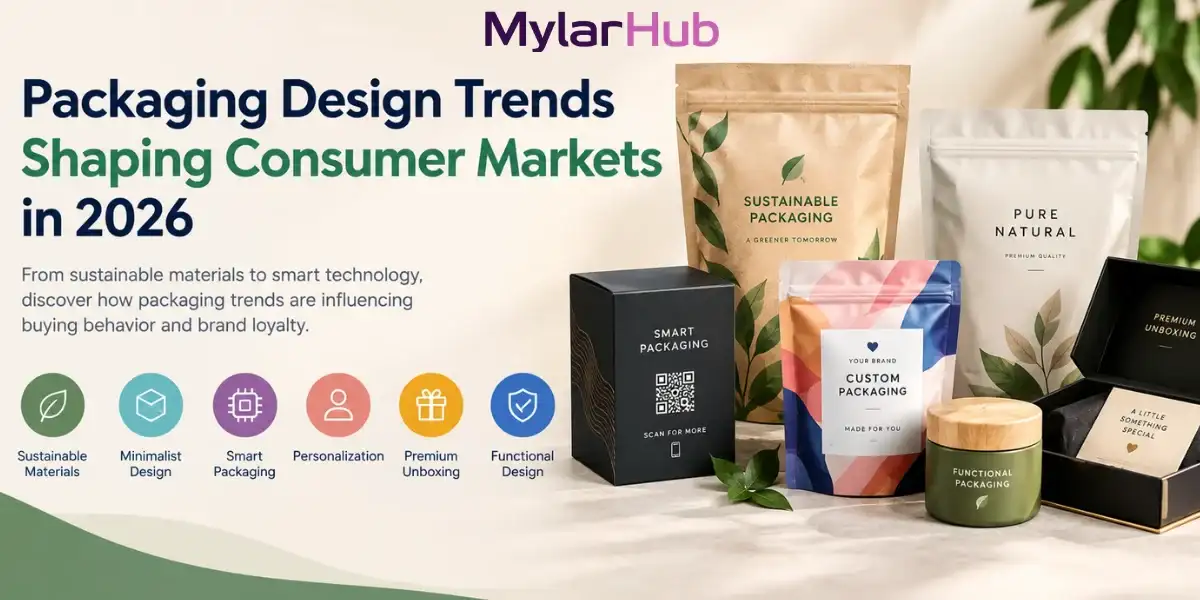
Packaging has become an important part of how consumers discover, evaluate, and remember products. In 2026, brands are paying closer attention to more than appearance alone. Sustainability, simplicity, technology, personalization, functionality, and the overall unboxing experience are all influencing how packaging is designed.
Consumer research also shows that packaging decisions are more complex than simply choosing the most sustainable material. Price, quality, convenience, product protection, food safety, shelf life and ease of use continue to influence how people evaluate products and packaging.
This guide explores the major packaging design trends shaping consumer markets in 2026 and explains what they can mean for brands and packaging suppliers.
Packaging Design Trends At a Glance
|
Trend |
Consumer Impact |
Business Benefit |
|
Sustainable Materials |
Builds trust |
Improves brand reputation |
|
Minimalist Design |
Enhances clarity |
Reduces production costs |
|
Smart Packaging |
Improves engagement |
Increases customer interaction |
|
Personalization |
Creates emotional connection |
Boosts customer loyalty |
|
Premium Unboxing |
Enhances experience |
Increases perceived value |
|
Functional Design |
Improves convenience & Usability |
Supports product protection & storage |
1. Sustainable Packaging Becomes More Important
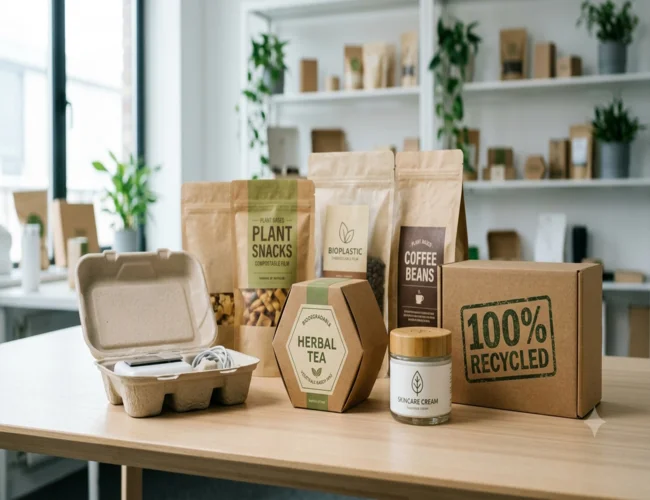
Sustainable packaging continues to receive attention from both consumers and brands. Recyclability, reusable formats, reduced material use, and recycled content are among the characteristics consumers may consider when evaluating packaging.
However, sustainability is only one part of the purchasing decision. McKinsey's 2025 global packaging research found that price and quality remained major purchasing considerations, while food safety and shelf life ranked among the most important packaging characteristics.
Shorr's 2025 Sustainable Packaging Consumer Report provides another perspective. Its survey of 2,016 U.S. consumers found that 90% were more likely to buy from a brand or retailer if its packaging was eco-friendly, while 54% reported consciously purchasing products with sustainable packaging during the previous six months.
Common sustainability-focused packaging approaches include:
-
Recyclable materials
-
Reduced material use
-
Lightweight packaging structures
-
Reusable packaging formats
-
Recycled content
-
Clear sustainability information
The most appropriate approach depends on the product, market, packaging format, available recycling infrastructure, and the claims a brand can substantiate.
2. Minimalist Packaging Improves Clarity
Consumers encounter a large number of products across physical and digital retail environments. Minimalist packaging can help brands communicate important information without overwhelming the customer with visual elements.
Minimalist packaging commonly uses:
-
Clean typography
-
Limited color palettes
-
Clear product messaging
-
Strong visual hierarchy
-
Reduced visual clutter
The goal is not simply to remove design elements. Instead, minimalist design focuses attention on the information and visual features that matter most.
|
Traditional Packaging |
Minimalist Packaging |
|
Heavy graphics |
Clean layouts |
|
Excessive text |
Clear messaging |
|
Multiple design elements |
Focused visual hierarchy |
|
Higher ink usage |
Reduced material usage |
For brands, minimalist design can also create a consistent visual identity across different products and packaging formats.
3. Smart Packaging Creates Interactive Experiences
Packaging is increasingly becoming a connection point between physical products and digital content.
Smart packaging can incorporate technologies such as:
-
QR codes
-
NFC technology
-
Product authentication features
-
Digital product information
-
Interactive brand experiences
What Is Smart Packaging?
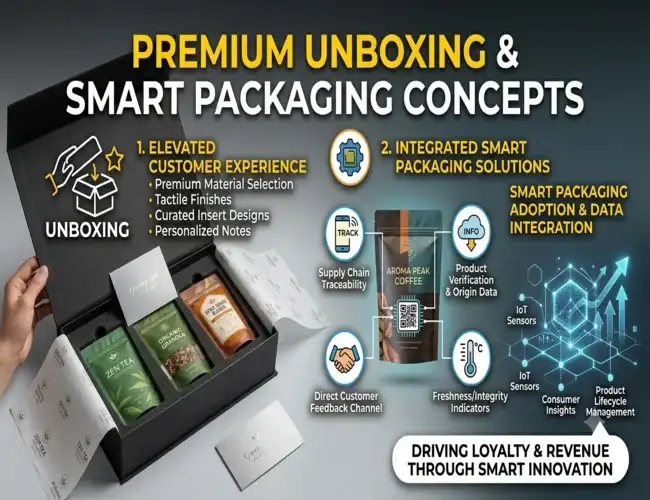
Smart packaging uses digital or interactive features to connect physical packaging with information or experiences that consumers can access through digital devices. For example, a QR code can direct customers to product instructions, tutorials, ingredient information, promotions, loyalty programs, or additional brand content. These features can give packaging a purpose beyond holding and protecting the product.
4. Premium Unboxing Experiences Increase Perceived Value
The packaging experience does not end when a customer sees a product on a shelf. For products purchased online, the package may become one of the customer's first physical interactions with the brand. Brands can create a more premium unboxing experience through:
-
Custom inserts
-
Specialty finishes
-
Soft-touch surfaces
-
Luxury textures
-
Layered presentation
-
Carefully designed internal packaging
A well-planned unboxing experience can make the product feel more considered and reinforce the visual identity established through advertising, websites, and other customer touchpoints. Premium packaging does not necessarily require excessive decoration. The materials, structure, printing, finishing, and presentation should work together to support the product and target audience. Packaging can also influence how customers perceive quality and value. For a deeper look at this relationship, see our guide on how packaging influences consumer buying decisions.
5. Personalized Packaging Creates Stronger Connections
Personalization gives brands more ways to create packaging experiences for specific audiences, campaigns, products and occasions. Modern printing technologies make smaller and more customized packaging runs increasingly practical for many businesses.
Examples include:
-
Variable printing
-
Custom customer messages
-
Limited-edition packaging
-
Regional designs
-
Personalized labels
-
Campaign-specific packaging
Personalization can also allow brands to test different designs without committing to one permanent packaging concept across an entire product line. For smaller brands, this can provide a way to create distinctive packaging while maintaining a consistent overall brand identity.
6. Functional Packaging Improves Convenience
Packaging design is not only about appearance. Customers also expect packaging to protect the product and make everyday use easier.
Functional packaging may include:
-
Easy-opening features
-
Resealable closures
-
Convenient storage formats
-
Durable structures
-
Product protection
-
Clear labeling
-
Appropriate portion or size options
McKinsey's 2025 global research found that food safety and shelf life remained among the most important packaging characteristics influencing consumer purchasing decisions. Ease of use, durability, label information, environmental impact, and appearance were also evaluated by consumers.
For products that require extended protection from moisture, oxygen, light, or odors, the packaging structure becomes particularly important. Brands evaluating flexible formats can also explore our guide to Mylar bags for long-term food storage to understand how barrier packaging is used for storage applications. This means effective packaging design often requires a balance between visual appeal and practical performance.
What Do Consumers Want From Packaging in 2026?
Consumer expectations are not centered on one packaging characteristic.
Recent research points to several important considerations:
-
Sustainability: Shorr's 2025 survey found that 90% of surveyed U.S. consumers were more likely to buy from brands with sustainable packaging.
-
Actual purchasing behavior: 54% of respondents in the same survey reported consciously purchasing products with sustainable packaging during the previous six months.
-
Product performance: McKinsey's global 2025 research found that price and quality remained major purchasing factors.
-
Packaging performance: Food safety and shelf life were among the leading packaging considerations across the surveyed markets.
-
Recyclability: Among sustainability characteristics, recyclability ranked as the most important consideration globally in McKinsey's 2025 survey.
The research therefore suggests that successful packaging strategies need to consider several consumer expectations at the same time rather than relying on a single trend.
How Are Packaging Suppliers Adapting to These Trends?
Packaging suppliers are responding to changing requirements by providing more choices in materials, formats, printing methods, finishes, closures, and production quantities.
Businesses may evaluate packaging based on:
-
Product protection
-
Branding requirements
-
Order volume
-
Packaging functionality
-
Material selection
-
Shelf presentation
-
Storage and transportation requirements
-
Customer expectations
From a practical packaging perspective, these decisions often have to be considered together. A package may look attractive on screen but still need the right material structure, thickness, seal, closure, dimensions, and barrier properties for the product it will hold. The printing method and finish also need to work with the chosen packaging material and the brand's design requirements.
For flexible packaging, product characteristics are particularly important. Factors such as moisture sensitivity, exposure to oxygen or light, odor control, expected shelf life, filling method, storage conditions, and how frequently the package will be opened can all affect the appropriate packaging structure.
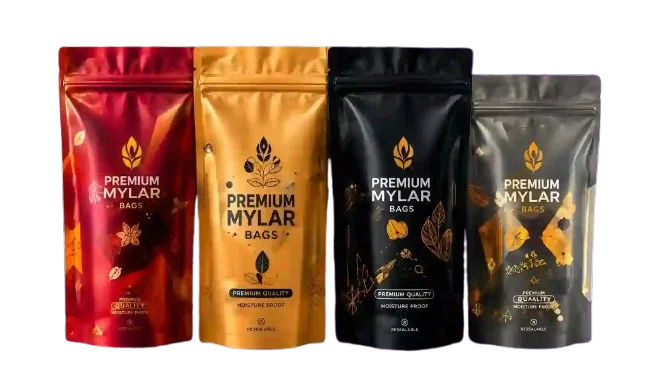
For brands that want packaging designed around their product and visual identity, Custom Mylar Bags can provide options for custom printing, different pouch styles, and tailored packaging specifications.
The appropriate packaging format depends on the product, required protection, intended use, production requirements, and target market.
What Will Packaging Design Look Like in the Future?
Packaging design is likely to continue developing around several interconnected priorities:
-
Sustainability and material efficiency
-
Product protection
-
Convenience and functionality
-
Digital integration
-
Personalization
-
Clear communication
-
Premium presentation
The important point is that these trends do not need to be treated separately. A single package can combine functional features with a minimalist visual design, digital information, personalized printing, and material choices that support a brand's sustainability goals. At the same time, brands should avoid adopting a trend simply because it is popular. Packaging decisions should reflect the product, target audience, sales channel, operational requirements, and substantiated product or material claims.
Conclusion
Sustainability remains an important consideration, but recent research shows that consumers also care about factors such as quality, price, convenience, food safety, shelf life, durability, and ease of use. For brands, the most effective approach is not simply to follow every packaging trend. Instead, packaging should be selected and designed around the product, audience, sales channel, brand identity, and practical requirements.
For businesses exploring flexible packaging, Mylar packaging bags can provide options for custom printing, product protection, and different packaging formats. The right solution ultimately depends on the product and the performance requirements of the package.