


Mylar Bag Size Charts: Exact Dimensions & How to Choose the Right Size?
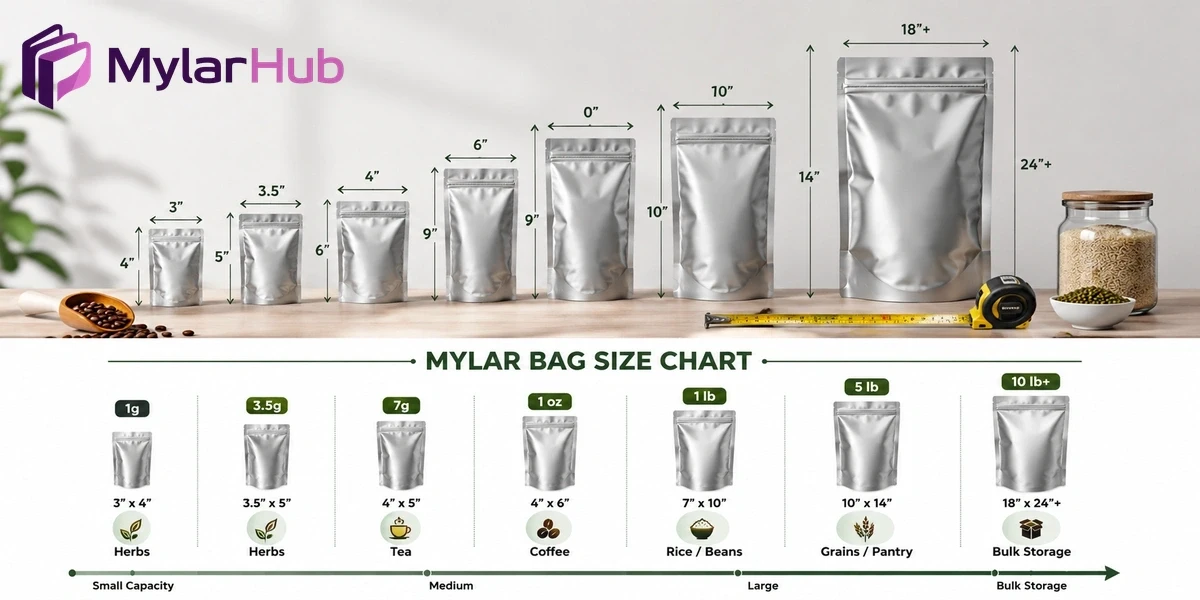
The incorrect choice of the packaging size can silently ruin your product presentation, its storage quality and even the experience of your customers. This is precisely the reason why packaging waste or overfilled bags are a problem to most businesses.
This is a mylar bag size chart that will help you out of this dilemma by providing you with a clear system which relates dimensions, capacity and actual use of the product. You will no longer have to guess but make a selection of the best fit based on a developed guide.
In this blog, you will read a total breakdown of the chart of the dimensions of the mylar bag, the real capacity, and an intelligent decision system based on the common mylar bag sizes in inches. In conclusion, you will know perfectly how to choose the correct size.
What Is a Mylar Bag Size Charts?
A mylar bag size chart is an organized system of reference that correlates the size of a bag with the amount of capacity and the type of use. The majority believe that size is just a matter of height and width- that is not the case. The correct size chart will also take into account the volume, product density and sealing space particularly in choosing such styles as Window Mylar Bags that can be seen and the product displayed.
This is significant because:
- Food storage packaging
- Retail and branding packaging
- Long-term preservation storage
The greatest error of the user is that size equals capacity although size does not equal capacity since various products do not take up space in the same manner. This confusion is totally eliminated with a correct mylar bag dimensions chart.
Complete Mylar Bag Size Chart
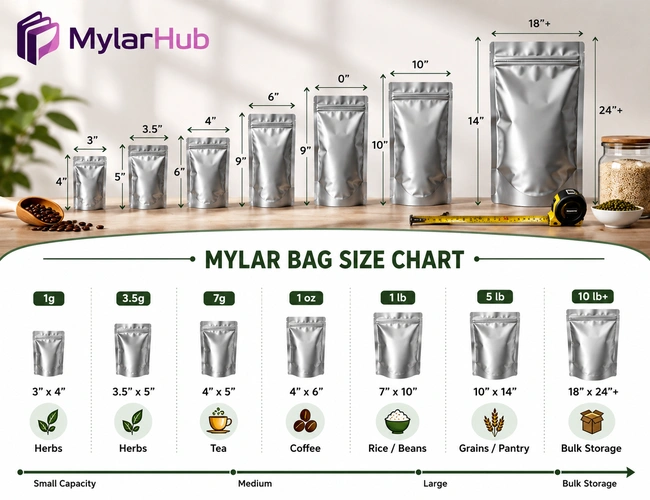
Below is a quick visual guide showing the most common Mylar bag sizes and their typical applications. Use it as a reference before checking the detailed dimensions in the table.
|
Bag Size |
Dimensions (inches) |
Capacity (Approx.) |
Common Use |
|
1g bag |
3 x 4 |
1 gram |
Herbs, samples |
|
3.5g bag |
3.5 x 5 |
1/8 oz |
Small retail items |
|
7g bag |
4 x 5 |
1/4 oz |
Tea, herbs |
|
1 oz bag |
4 x 6 |
28g |
Coffee, snacks |
|
1/2 lb bag |
6 x 9 |
8 oz |
Grains, food items |
|
1 lb bag |
7 x 10 |
16 oz |
Rice, beans |
|
5 lb bag |
10 x 14 |
Bulk storage |
Pantry goods |
|
10 lb+ |
18 x 24+ |
Bulk |
Emergency storage |
Note: Capacity varies depending on product density and packing style.
This standard mylar bag sizes in inches table provides you with a real world reference, rather than an approximation.
Mylar Bag Capacity Guide
A good mylar bag capacity guide will assist you in matching the type of product with the volume of storage as opposed to just using the weight. When selecting 3.5 Gram Mylar Bags to store small retail portions as well as exact packaging requirements
Real-life examples:
- 1 oz bags → coffee, tea, dried fruits
- 1 lb bags → rice, beans, flour
- 5 lb bags → bulk grains or pantry storage
- 10 lb+ bags → emergency food storage
Various products react differently. As an illustration, a cup of coffee occupies a greater space, compared to rice that has the same weight. That is why you should always be able to base your decision on capacity, not just paper numbers.
How to Choose the Right Mylar Bag Size?
The majority of packaging errors occur due to neglect of type of product and being preoccupied with weight alone. This is an easy decision system:
Step 1: Identify Product Type
Is it herbs, food, retail items, or bulk storage?
Step 2: Understand Volume
Light and fluffy products need larger bags than dense ones.
Step 3: Choose Thickness
- 3.5 mil → retail use
- 5–7 mil → food storage
- 10+ mil → long-term storage
Step 4: Leave Headspace
Never overfill your bags. Proper space ensures strong sealing and freshness. This is the core of how to choose mylar bag size effectively.
Mylar Bag Thickness & Durability Explained
Thickness plays a huge role in product protection.
- 3.5–4 mil → lightweight retail packaging
- 5–7 mil → standard food storage protection
- 10+ mil → heavy-duty long-term storage, including bulk solutions like 6 Gallon Mylar Bags for large-scale preservation.
Thicker bags improve oxygen blocking and moisture resistance, which directly improves product shelf life. That’s why mylar bag thickness and capacity must always be considered together.
Real-World Use Case Mapping
Here is how industries actually use different sizes:
|
Product Type |
Recommended Size |
|
Herbs |
1g – 7g bags (4×5) |
|
Coffee |
1 oz – 1 lb (4×6) |
|
Rice/Beans |
1 lb – 5 lb (7×10) |
|
Snacks |
1 oz – 8 oz (3×5) |
|
Bulk Storage |
10 lb+ (10×14) |
This shows how packaging connects directly with real business needs.
Common Mistakes When Choosing Mylar Bags
Many users make simple but costly mistakes:
- Choosing bags only by weight
- Ignoring product density differences
- Overfilling bags without sealing space
- Not considering thickness requirements
Being aware of these factors and avoiding common mistakes when using Mylar bags to ensure better storage and product quality.
Final Takeaway
Choosing the right Mylar bag size is not just about fitting your product it's about protecting freshness, reducing waste, and creating a professional presentation. By considering dimensions, capacity, thickness and product density together you can select packaging that performs reliably and meets your storage or branding goals. If you need custom Mylar bags, the Mylar Hub team can help you find the right size and style for your application.