


How Many Grams Are in an Ounce? Simple Conversions Made Easy
Understanding weight conversions should never slow you down particularly when accuracy is crucial. It is a serious benefit to know how to convert the number of grams to ounces. Whether you are following a global recipe, weighing ingredients, or measuring products for packaging. Businesses that package products by weight also rely on accurate measurements when selecting the right custom Mylar bags for labeling, storage and retail presentation.
This guide is more than just an answer. You'll learn the correct conversions, real-life examples, common mistakes, and practical accuracy tips that most blogs overlook.
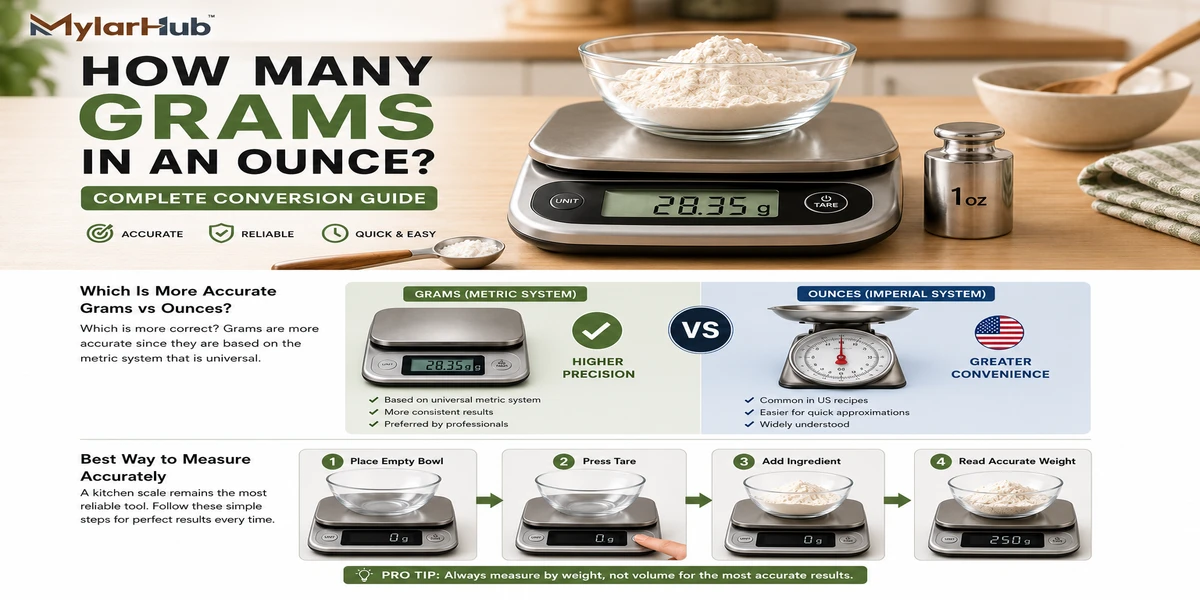
The Exact Answer of How Many Grams in an Ounce?
One ounce is equivalent to 28.3495 grams.
In most recipes, this is rounded off to 28 grams and is applicable in general cooking. But the difference between using the accurate value and the approximate value is noticeable when the accuracy is important particularly in baking or measuring the product.
Quick takeaway:
- 1 oz = 28.35 grams (precise)
- 1 oz = 28 grams (rounded)
Grams to Ounces Conversion Table
Use this improved chart for fast and reliable conversions:
|
Grams |
Ounces |
|
10 g |
0.35 oz |
|
25 g |
0.88 oz |
|
50 g |
1.76 oz |
|
100 g |
3.53 oz |
|
200 g |
7.05 oz |
|
250 g |
8.82 oz |
|
500 g |
17.64 oz |
|
1000 g |
35.27 oz |
Pro Tip: You can save or bookmark this chart to use on a daily basis, it saves time and you will not make calculation mistakes.
Ounces to Grams Conversion Chart
The following is the reverse conversion to enable easy use:
|
Ounces |
Grams |
|
1 oz |
28.35 g |
|
2 oz |
56.7 g |
|
3 oz |
85.05 g |
|
5 oz |
141.75 g |
|
8 oz |
226.8 g |
|
10 oz |
283.5 g |
|
16 oz |
453.6 g |
This twin-chart method will make sure that you do not have to alternate tools when working.
Why Efficiency Matters More Than You Think?
The majority of blogs are limited to mere conversions. However, the accuracy is not limited to numbers.
Ingredient Density Changes Everything
All the ingredients do not have the same weight per ounce:
- 1 oz flour ≠ 1 oz sugar (in volume)
- Butter, chocolate, and protein powders behave differently
Even if you convert correctly, using cups instead of weight can still produce inaccurate results.
For businesses selling products by weight, accurate measurements go hand in hand with choosing quality Mylar packaging bags that maintain freshness and provide consistent packaging.
Which Is More Accurate Grams vs Ounces?
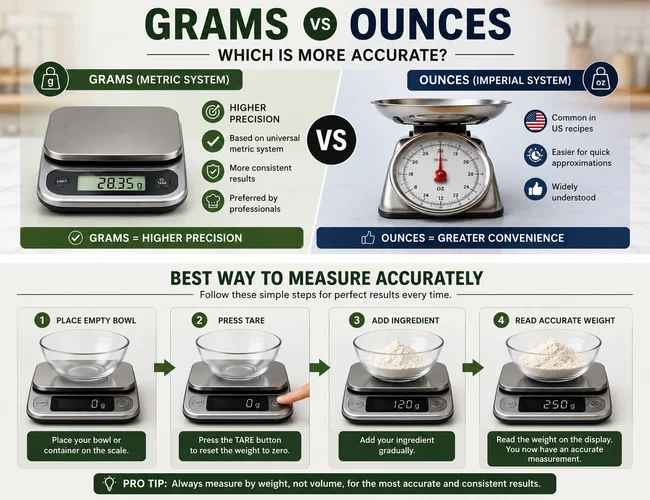
Which is more correct? Grams are more accurate since they are based on the metric system that is universal.
Why grams are better:
- No variation due to ingredient shape or air pockets
- More consistent results in baking
- Preferred by professional chefs
Why ounces are still used:
- Common in US recipes
- Easier for quick approximations
Best practice: Use grams for precision and ounces for convenience.
If you're packaging products measured in grams or ounces, selecting the correct bag size is equally important. Our 3.5 Mylar bags are ideal for products sold in smaller weight quantities.
Simple Formula to Convert Instantly
No difference in shape of ingredients or air pores.
- Ounces → Grams
Multiply by 28.3495 - Grams → Ounces
Divide by 28.3495
Quick mental hack:
- Divide grams by 30 for a rough estimate
- Multiply ounces by 30 for quick conversion
This saves time when you are working without tools.
Common Conversion Mistakes to Avoid
Most people get conversions wrong due to these errors:
Rounding Too Early
It is important to use 28 rather than 28.35 to make sensitive recipes inaccurate.
Confusing Fluid Ounces with Weight
- Fluid ounces measure volume
- Ounces measure weight
They are NOT interchangeable.
Using Cups Instead of Weight
Cups vary depending on how ingredients are packed. This leads to inconsistent results.
Real World Examples
Here is how conversions work in real scenarios:
- 1 oz flour ≈ 28 grams
- 1 oz sugar ≈ 28 grams
- 1 oz butter ≈ 28 grams
Although the weight remains the same, volume changes depending on the ingredient. That's why professional kitchens and manufacturers rely on digital scales.
Products such as coffee, spices, herbs, snacks and powdered supplements are commonly sold by weight. Using food storage Mylar bags helps preserve freshness while ensuring accurate portion packaging.
Best Way to Measure Accurately
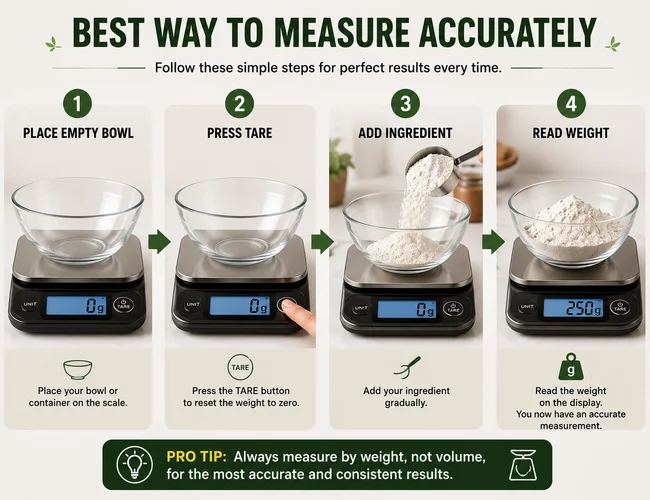
A kitchen scale remains the most reliable tool.
Steps to measure correctly:
- Place your bowl on the scale
- Press the tare button
- Add ingredients gradually
- Switch between grams and ounces if needed
This method ensures zero guesswork and perfect results every time.
Once products are accurately weighed, storing them in smell proof Mylar bags helps protect them from moisture, oxygen, and unwanted odors during storage and transportation.
Metric vs Imperial System: Why It Matters
The world uses two main systems:
Metric System (grams)
- Used globally
- Standardized and precise
Imperial System (ounces)
- Common in the US
- Less consistent for detailed measurements
Knowledge of both systems will enable you to use any recipe all over the world without being confused.
Advanced Tips for Better Accuracy
To truly outperform average results:
- Always measure by weight, not volume
- Avoid rounding in baking recipes
- Use digital scales for consistency
- Stick to one measurement system per recipe
These small improvements create professional-level results.
Final Thoughts And Expert Support
When you understand how to measure grams into ounces you can have full control of accuracy which can be in cooking, baking or dealing with precise measurements. The correct conversion and the correct tools should always be used to ensure a consistent effect of professional quality. At MylarHub we know that we should be precise in detail, be it measurements or packaging solutions that ensure your products are safeguarded in the best way possible.
FAQs
Is 28g or 28.35g correct for 1 ounce?
They both are used but the right one is 28.35g. It is applied when precision is needed.
What will 0.5 ounces weigh?
0.5 oz equals 14.17 grams.
Is there any difference between fluid ounces and ounces?
No. Fluid ounces is volume and ounces is weight.